
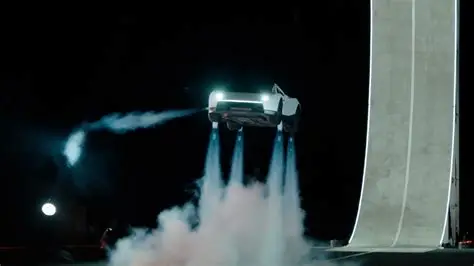
With Elon Musk, pigs will fly someday. And Nigerians will take their seats on board. Costs no matter. Expect Davido, Omah Lay, Ada Ehi, and Bo Hairs—and other trend chasers who have the moolah to splash around—to soon ditch their cybertrucks for a flying car. By 2028, latest.
“This is the culmination of incredible work by Tesla and SpaceX engineers working closely together to make something that you haven’t seen in any movie,” Musk said, according to the USA Today.
But try to blow off the bubble, and see the substance in the cocktail of claims the Texas mad rocket scientist just handed the auto-industry.
Tesla second-gen Roadster 2026 has been souped up, no doubt. It uses 10 nozzles paired with ultra high-pressure air tanks of cold gas, thanks to his SpaceX’s propulsion expertise; it also boasts a 0-60 mph time of roughly 0.81 seconds for the car’s ground performance—unheard of in today’s automobile technology.
But some auto nerds think that’s all a buzz. “Cold-gas thrusters are typically used for fine attitude control on spacecraft, not for generating enough sustained lift to carry a two-ton vehicle off the ground,” Tech Insider said before the car’s recent demo.
Can it really fly?
After nine years of promises and five delays, the industry watchers are still asking if Musk’s pig can fly —elsewhere, apart from the ramp in its Texas facility.
The answer is complicated.
“A remote-operated demonstrator performing a tethered or heavily instrumented hop in a controlled Texas facility is a very different claim than “the Roadster can fly,” Tech Insider added.
Musk doesn’t give a fig about that. He himself agrees its success is not certain. “I mean that,” he said after the demo to a selected audience. “It’ll probably work, but if it doesn’t work, we’re at a safe distance.”
It was the first time Musk would take a flyer on his ambition. That safe distance he stood now is no farther than it was when Tesla’s supposedly Self-driving Car hit the market.